- Accueil
- University Diploma in French Studies – DUEF
University Diploma in French Studies – DUEF
Duration: 1 semester or 1 year, as desired ; 12 weeks of classes per semester ; 30 ECTS credits per semester.
Campus : Toulouse
Type of degree: DUEF (University Diploma in French Studies) accredited by ADCUEFE (Association of Directors of University Centres for French Studies).
Capacity: Minimum: 8 – Maximum: 16
Presentation of the training program
Cette formation a pour objectif d’acquérir des compétences en compréhension et expressions orales et écrites en langue française dans un but universitaire, professionnel et pour s’intégrer dans la vie quotidienne.
The University Diploma in French Studies (DUEF) offers intensive semester-based training designed for learners of French as a Foreign Language. Its primary objective is to strengthen language mastery while deepening students’ understanding of French culture and academic conventions. At the more advanced levels, the programme also focuses on university methodology to ensure a smooth and successful integration into higher education in France.
The DUEF is available across five proficiency levels, aligned with the Common European Framework of Reference for Languages (CEFR): A1, A2, B1, B2 and C1.
The advantages of the training program
- High-quality instruction delivered by experienced teachers specialising in French as a Foreign Language, using varied and engaging learning materials to maintain learners’ motivation.
- Personalised academic support, including individual monitoring and tutoring provided by our pedagogical coordinators.
- Authentic cultural immersion in Toulouse, through a range of activities that are often free or offered at reduced cost.
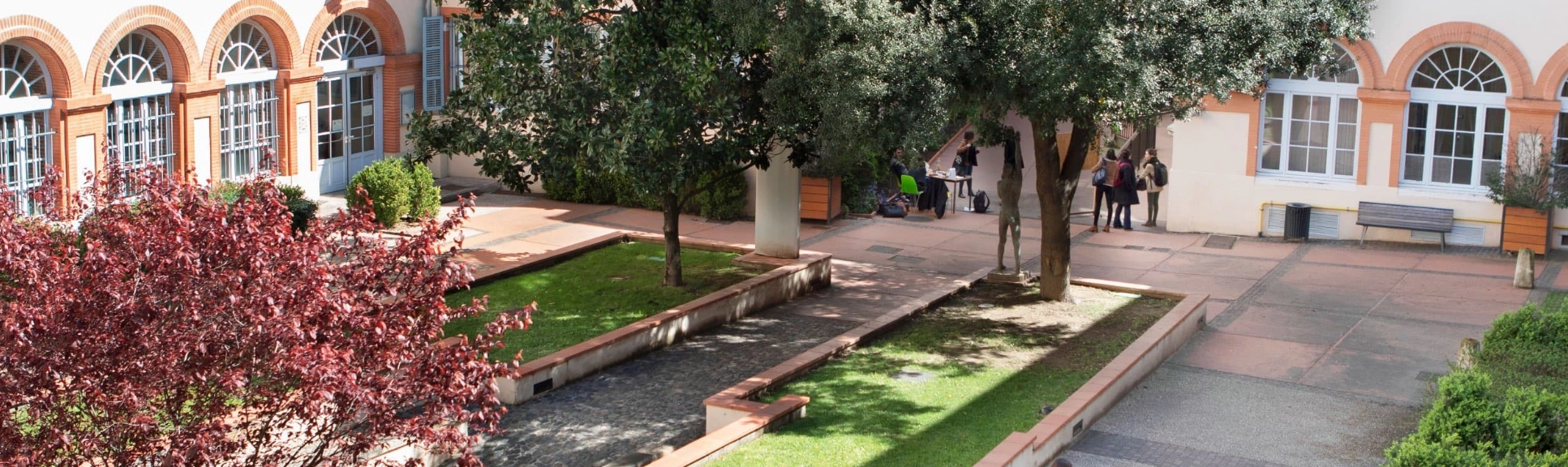
- A stimulating university environment, with access to the university library, student cafeteria, and the institution’s cultural and social life.
- A recognised and certified learning framework, accredited by the Label Qualité FLE, renewed in 2025.
- DUEF B2 and C1 diplomas are recognised by many French universities as official proof of French language proficiency for admission into degree programmes.
Educational objectives of the training program
At the end of the programme, students will have acquired the following skills:
The DUEF A1 level introduces learners to the fundamentals of the French language. Students acquire essential linguistic tools and basic communication skills needed for simple, everyday interactions.
Upon completion, learners will be able to engage in very basic oral exchanges, understand simple written messages related to everyday life, and provide personal information such as identity, activities, and daily habits.
During the DUEF A2 level, students develop the ability to establish social contact in French and participate in simple exchange on familiar topics. They learn to express preferences, describe activities, discuss leisure interests, and share personal experiences.
They also become familiar with a variety of informational texts and can produce short written narratives describing personal events.
In the DUEF B1 level, learners strengthen their ability to justify and defend an opinion orally and in writing by constructing simple arguments. They develop the capacity to handle unexpected situations with greater ease.
Vocabulary expansion enables students to identify key information in common documents (letters, brochures, official forms) and to understand most conversations or audio materials related to familiar topics.
The DUEF B2 level aims to reinforce linguistic autonomy. Students acquire the skills required to participate comfortably in most oral interactions. They learn to write fluidly in a range of formats (letters, reports, narratives), appreciate accessible literary texts, and independently monitor grammatical and lexical accuracy in order to significantly reduce errors.
Building on the competencies expected at B2 level, the DUEF C1 programme develops advanced academic skills. Learners master the structuring and delivery of clear, coherent oral presentations, take effective notes, and produce complex argumentative texts consistent with university expectations.
The programme also enhances listening and reading comprehension by refining the ability to detect implicit meanings, understand references and appreciate stylistic effects. At this level, students can follow most films in French without significant difficulty, including those featuring varied accents or informal expressions.
Assessment of knowledge and skills
French language skill blocks are primarily assessed through continuous assessment (three evaluations per semester), ensuring regular monitoring of progress.
Specialised units may be evaluated through:
- continuous assessment (CA),
- final examinations (FE) at the end of the semester, or
- mixed assessment combining both CA and FE.
A minimum final grade of 10/20 is required to validate the DUEF and progress to the next level. In case of failure, a resit session may be offered subject to the jury’s approval.
Further details are available in the DUEF examination guidelines.
Teaching methods used:
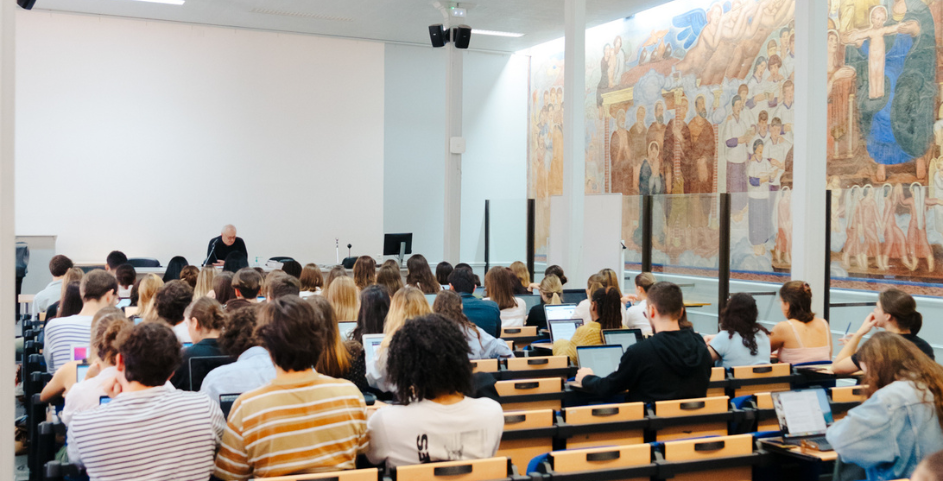
Courses are delivered in person.
- Initial assessment: evaluation of linguistic level and learner needs.
- Oral practice: conversation sessions focused on fluency, pronunciation, and oral expression.
- Reading and listening comprehension: targeted exercises using varied authentic materials.
- Written expression: structured writing tasks strengthening grammar and syntax.
- Cultural components: integration of cultural elements into course activities.
- Learners also have access to equipped classrooms, lecture halls, computer rooms, and the university library.
Chiffres clés
en 2024-2025
en 2024-2025
en 2022-2023
Program
Each session consists of 12 weeks of classes followed by an examination period. Weekly teaching hours range from 18 to 21 hours, organised into thematic and linguistic units.
Two sessions are offered each year:
- Semester 1: September to December
- Semester 2: January to April
Before classes begin, a placement test is conducted to determine the most suitable level for each student.
Contenu de la formation
Nos cours intensifs de français général offrent un large éventail d’activités pédagogiques conçues pour développer l’ensemble des compétences linguistiques des apprenants :
- Activités de compréhension et d’expression, à l’écrit comme à l’oral, à partir de supports variés ;
- Étude théorique et exercices pratiques de grammaire française ;
- Enrichissement lexical, pour affiner et nuancer l’expression ;
- Découverte des dimensions socio-culturelles du monde francophone, intégrées de manière transversale à l’apprentissage de la langue.
Nos méthodes pédagogiques dynamiques et interactives incluent simulations, jeux de rôles, débats, exposés, ateliers, études d’œuvres littéraires, et bien plus encore. En complément, des projets pédagogiques intergroupes sont régulièrement organisés : jeux de piste, sorties culturelles, soirées internationales, etc.
Ateliers de renforcement linguistique – Gratuits et ouverts à tous
En parallèle des cours intensifs, des ateliers de renforcement linguistique sont proposés deux fois par semaine, de 13h30 à 15h30. Ces ateliers sont gratuits et facultatifs.
Ils permettent aux étudiants de pratiquer la langue différemment, à travers des activités variées et ludiques. C’est l’occasion idéale de revoir les notions abordées en cours du matin, dans un cadre plus détendu et convivial. Ces ateliers sont une véritable mise en pratique du français en action.
Activités culturelles : découvrez Toulouse en français
L’après-midi ou en soirée, des activités culturelles riches et variées sont proposées pour compléter l’apprentissage linguistique par une immersion dans la culture locale. Ces sorties permettent aux apprenants :
- de pratiquer le français en situation réelle,
- de découvrir le patrimoine historique et culturel de Toulouse,
- de créer des liens avec leurs camarades dans un contexte informel et chaleureux.
Qu’elles soient gratuites ou à prix modéré, guidées ou accompagnées, ces activités viennent enrichir l’expérience pédagogique et renforcent l’apprentissage des cours du matin.
Training program
DUEF A1 : 216 hours
understanding clear, simple messages at a slow pace; identifying basic information.
interacting on simple topics; responding to basic questions.
understanding simple, everyday texts; answering basic queries.
providing simple personal information; describing daily activities; recounting basic experiences.
DUEF A2 : 216 hours
understanding simple messages on familiar topics.
describing one’s environment and impressions; responding to an interlocutor; asking for simple information.
identifying key information in personal letters or everyday documents.
writing short, organised narratives and structured messages (formal or informal).
DUEF B1 : 216 hours
understanding main and secondary ideas on familiar or current topics.
producing coherent speech to express opinions and feelings.
analysing one or two texts, identifying opinions, cultural elements, and inferred meanings.
comparing data, reformulating ideas, describing people or events, expressing judgments.
using correct and precise structures in familiar contexts.
DUEF B2 : 240 hours
analysing authentic documents; note-taking to summarise lectures.
presenting well-structured, logical arguments; interacting fluidly with examiners.
understanding and interpreting various texts with nuance.
writing on social and cultural topics; introducing academic writing.
demonstrating strong grammatical control.
note-taking, documentary research, synthesis writing, oral presentations.
DUEF C1: 240 hours
analysing long authentic audio documents; producing structured summaries.
presenting a well-argued personal project; responding clearly during interactive questioning.
understanding complex argumentative texts.
producing structured academic essays and coherent written work aligned with stylistic expectations.
note-taking, project planning, individual and group work, exam preparation, documentary research, synthesis, and oral presentation skills.
Teaching team
The teaching team is composed of dynamic FLE specialists, each with over 15 years of professional experience. All instructors hold a Master’s degree in teaching French as a Foreign Language and regularly participate in professional development activities to maintain innovative and effective teaching practices.
For any inquiries, suggestions for improvement, or complaints, please contact:
Continuation of studies
The DUEF prepares international students for existing ICT programmes (bachelor’s and master’s degrees). Once you have successfully completed the DUEF, you will be able to apply for one of our degree programmes.
With the DUEF B2:
- Bachelor’s degrees:
- Bachelor’s degree in History
- Bachelor’s degree in Applied Foreign Languages (LEA): French/English/Spanish or German
- Bachelor’s degree in Mediation and Management of Artistic and Cultural Projects
- Bachelor’s degree in Psychology
- Bachelor’s degree in Information and Communication Sciences
- Bachelor’s degree in Education Sciences
- Bachelor’s degree in Philosophy
- Bachelor’s degree in Law
- Bachelor’s degree in Law, Political Science track
3rd year bachelor’s degrees: - Bachelor’s degree in Dietetics
- Bachelor’s degree in Management, track: Quality, Safety and Environment
- University diplomas:
- University Diploma in Common Law
- University Diploma in Victimology
- University Diploma in Migration and Exile
- University Diploma in Management of Religious Affairs and Secularism – ‘Secularism, Religion and Citizenship’
- University Diploma in Law and Religions
Ecclesiastical training at bachelor’s degree level: - Bachelor’s degree in religious sciences
- Bachelor’s degree in philosophy
- Bachelor’s degree in theology
- Bachelor’s degree in canon law
With the DUEF C1:
- Master’s degrees:
- Master’s degree in Teaching, Education and Training, 1st and 2nd levels
- Master’s degree in Children’s Books: library, publishing and multimedia
- Master’s degree in Clinical Health Psychology: support for dependent persons
- Master’s degree in Corporate Social Responsibility (CSR)
- Management Master’s in Business Management and Administration – Quality, Safety and Environment (QSE)
- Master’s level ecclesiastical training:
- Canonical Licence in Theology
- Canonical Licence in Canon Law
- Canonical Licence in Philosophy
- Ecclesiastical Doctorates:
- Canonical Doctorate in Philosophy
- Canonical Doctorate in Theology
- Canonical Doctorate in Canon Law
Fees and financing
1 semester = 1 level
You can enrol for a semester or a year (i.e. 2 semesters)
DUEF A1: €2,669/semester
DUEF A2: €2,669 / semester
Or €5000 / year (in this case, you study level A1 + level A2)
DUEF B1: €2,604 / semester
or €5000 / year (in this case, you study level A2 + level B1)
DUEF B2 preparation: €2,928 per semester
or €5259 per year (in this case, you will study level B1 + level B2)
DUEF C1: €2,928 per semester
or €5,519 per year (in this case, you will study level B1 + level B2)
Admission
Admission Requirements
Applicants must have completed secondary education.
Registration procedures
To apply, candidates must:
- Download the 2026–2027 application form
- Submit the completed file with all required documents to the IULCF office by email (iulcf@ict-toulouse.fr) or in person at 31 rue de la Fonderie, Building C2, 2nd floor, Room C207.
Required documents:
- Passport and visa copy (if applicable)
- ID photo
- Copy of the most recent diploma
- Motivation letter
- CV
- Proof of French level
Access times
Admission decisions are typically issued within 2 to 4 weeks after the application file is submitted.